
You must be logged in to post a review.
€89.00
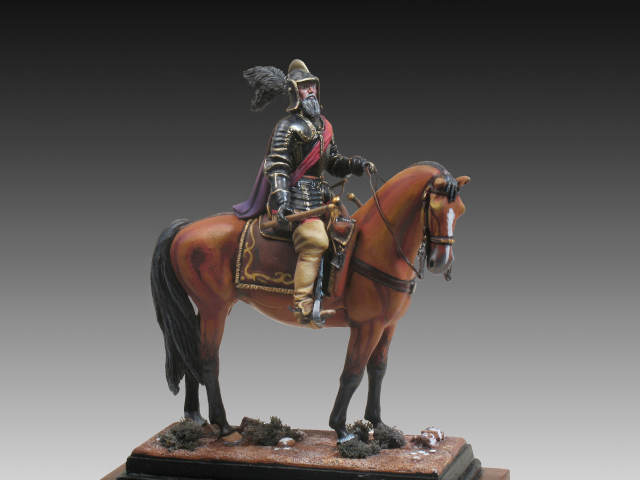
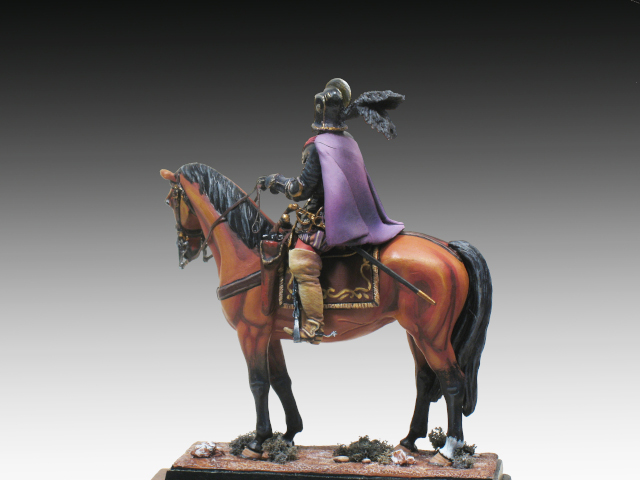
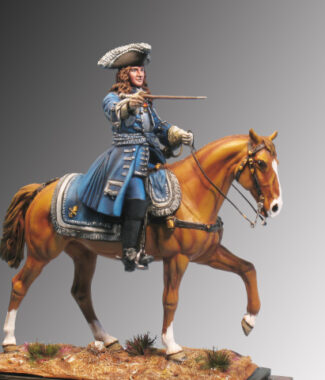
Figure to assemble and paint
Ref.: 15 – GE
Weight: 265 grs.
Material: White metal
Number of Pieces: 19
History:
Fernando Álvarez de Toledo y Pimentel (Piedrahíta, 29 October 1507 – Tomar, 11 December 1582), known as “the Grand Duke of Alba” and “the Great”, was a Castilian nobleman, military leader and diplomat, 3rd Duke of Alba de Tormes, 4th Marquis of Coria, 3rd Count of Salvatierra de Tormes, 2nd Count of Piedrahíta and 8th Lord of Valdecorneja, Grandee of Spain and Knight of the Illustrious Order of the Golden Fleece. He was the most important representative of the House of Toledo or House of Álvarez de Toledo.
He was the most trusted and obedient man of King Charles I of Spain and his son and successor, Philip II of Spain, chief steward to both, member of their Councils of State and War, governor of the Duchy of Milan (1555-1556), viceroy of the Kingdom of Naples (1556-1558), governor of the Habsburg Netherlands (1567-1573) and viceroy and constable of the Kingdom of Portugal (1580-1582). He represented Philip II in his betrothals to Isabel de Valois and Anne of Austria, who were the monarch’s third and fourth —and last— wives, respectively.
He is considered by historians to be the best general of his time and one of the best in history. He distinguished himself in the Battle of Tunis (1535), participating in Charles I’s victory over the Ottoman pirate Barbarossa, which restored the Spanish Monarchy’s dominance over the western Mediterranean, and in battles such as Mühlberg (1547), in which Emperor Charles’ army defeated the German Protestant princes.
He immortalised his memory by suppressing the rebellion in the Netherlands, where he acted with great severity in punishing the rebels, establishing the Tribunal of Tumults and completely defeating the troops of Louis of Nassau at the Battle of Jemmingen and William of Orange at the Battle of Jodoigne in the early stages of the Eighty Years’ War.
He crowned his career, already an old man, with the succession crisis in Portugal in 1580, defeating the Portuguese troops of the pretender Antonio, Prior of Crato, at the Battle of Alcántara and conquering that kingdom for Philip II. Thanks to his military genius, Spain achieved the unification of all the kingdoms of the Iberian Peninsula and the consequent expansion of its overseas territories.
On 26 December 1566, he received the Golden Rose, the blessed sword and cape granted by Pope Pius V, through the brief Solent Romani Pontifices, in recognition of his singular efforts in favour of Catholicism and for being considered one of its champions.
He is one of the most important figures in the Spanish Black Legend, which describes him as a true warlord, famous and intrepid, but at the same time brutal, relentless and extremely severe. Even so, Alba was the greatest hero Spain has ever produced and one of the leading men of his century, an undisputed leader, tough, strong and respectful of his men. His speeches, in which he addressed his troops as “gentlemen soldiers”, delighted the Tercios, his elite troops. He used to say: “Kings use men as if they were oranges, first squeezing the juice and then throwing away the peel”.
The figure is depicted in the Battle of Jodoigne, fought in October 1568, where we see the Duke of Alba, aged 61, older and looking tired, at the head of the Spanish troops. He is dressed soberly. Along with his staff, he wears a helmet adorned with feathers, simple armour, breeches and high boots. He wears a cape or hood that partially covers him from the cold Dutch autumns.
From these early battles of the Eighty Years’ War onwards, the Duke began to be assisted by his son Fadrique Álvarez de Toledo as commander of the Spanish Crown’s army under his command, until 1574 when both returned to Madrid.
Reviews
There are no reviews yet.